Development brief
CORDURA — Ask the material question in context
- Current material
- Target change
- Review context
Include the reference and the intended wear
- Material reference
- Identify the fabric name or sample reference, fiber composition, weave construction, GSM and usable width if known. Add a dated photograph of the face and reverse, with the warp direction marked. A remnant without a label can explain texture or handle; describe its use history so surface wear is not mistaken for the original finishing state.
- Application
- Explain where the textile will be used and which stresses matter most. Outdoor panels may encounter rubbing, grit, moisture and repeated folds. Workwear reinforcement may combine bending and laundering. For protective textile questions, identify the named hazard and relevant assembly requirements. Keep abrasion resistance, tear strength and wet performance as separate discussion points rather than combining them into a general durability request.
- Order context
- State the approximate quantity, destination, required supply format and cutting constraints. If a shade reference is important, mention the intended viewing conditions and acceptable shade band. Ask for applicable roll identification and packing details for the selected material. Commercial availability and timing are confirmed against the specific request; they cannot be inferred from a catalogue image or a previous sample.
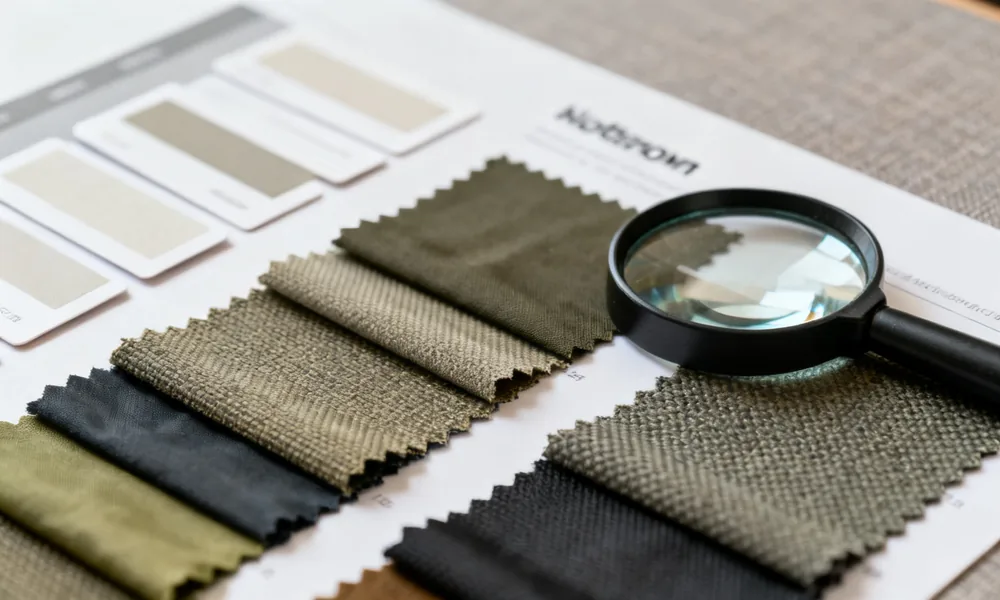
If you have a report, identify its method, date, specimen and conditioning in the message. For a changed construction, explain what must remain constant and what needs review. A finish or backing change can affect handle and seam formation; a water-resistance figure does not answer a vapor-transmission question. These distinctions help frame the next sample comparison without treating a requested target as a confirmed material property.